
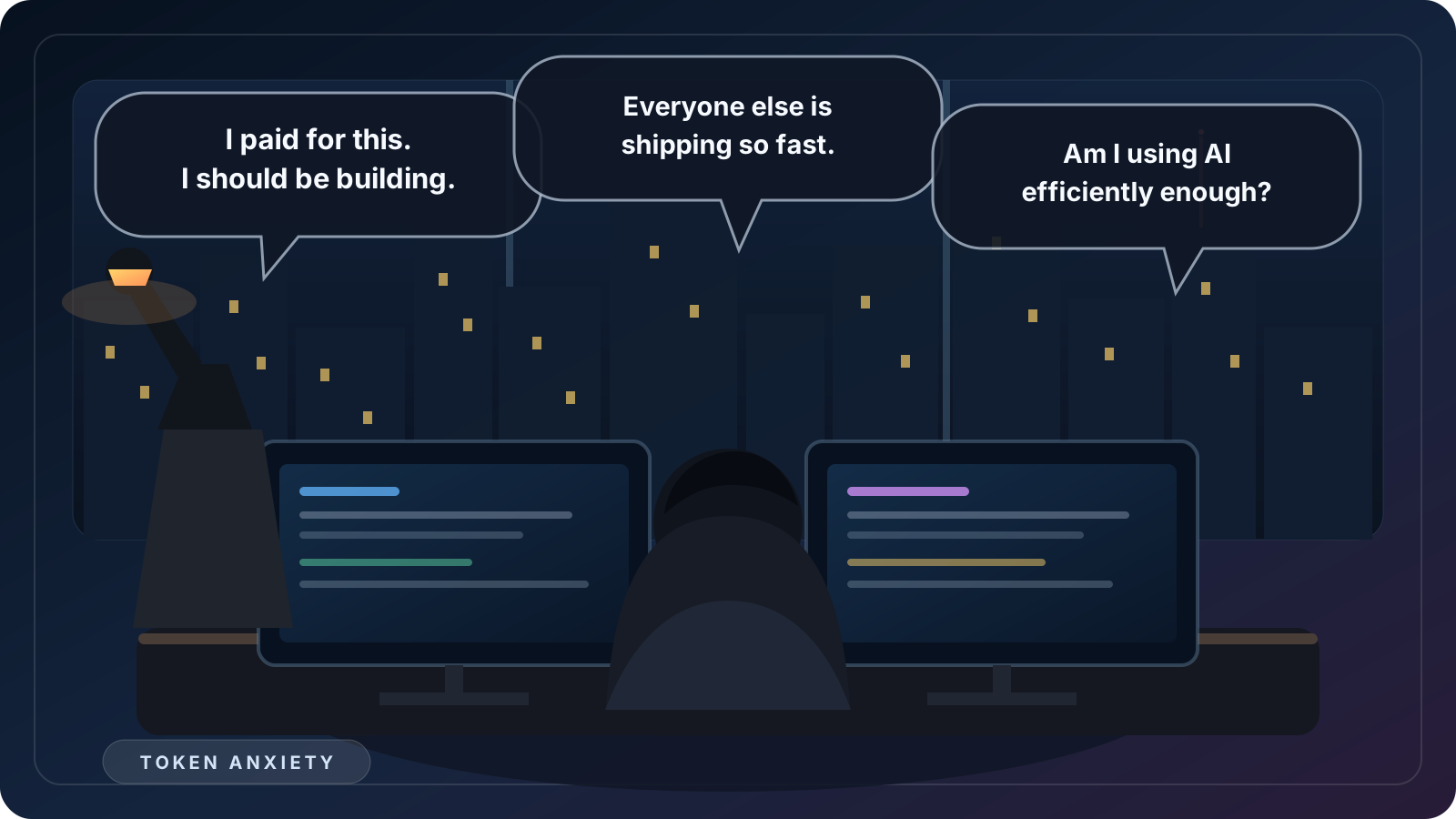
I pay around £200 a month for ChatGPT.
Over time, I have probably spent close to £2,000 on AI subscriptions and tools. When I think about that number, an uncomfortable question immediately follows:
What have I actually built with all of it?
The honest answer is: not as much as I thought I would.
I have built one project that I am genuinely proud of. Without AI, I do not think I would have been able to build it, at least not in the same amount of time or at the same level. AI gave me a kind of productivity I could not have imagined before these tools appeared.
That should make me feel empowered.
Sometimes it does.
But strangely, AI has also made me feel more anxious, less productive and further behind.
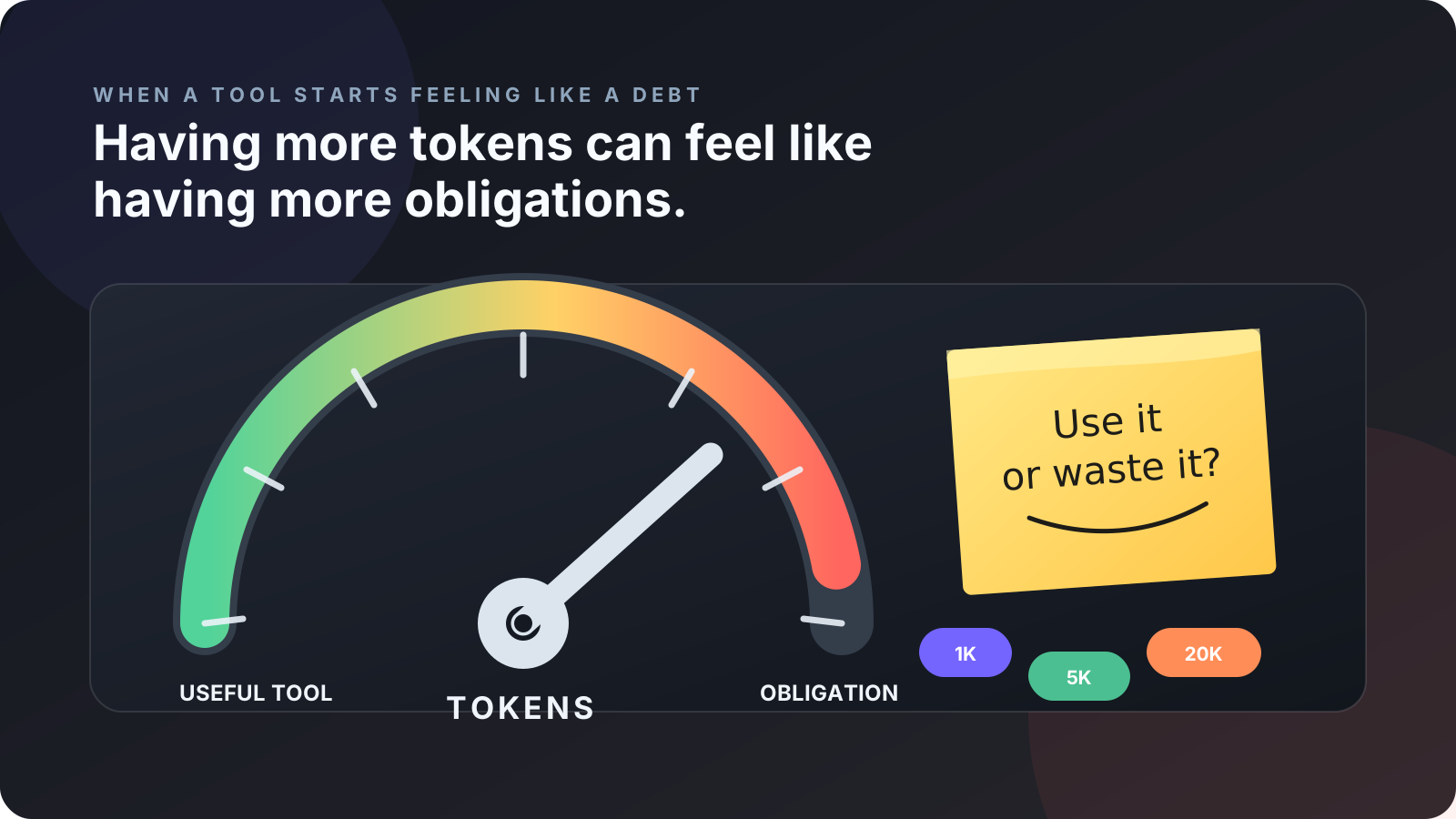
Having More Tokens Can Feel Like Having More Obligations
People often talk about token limits as a technical problem. They complain about reaching usage caps, getting slowed down or paying for an expensive subscription that still feels limited.
But there is another kind of token problem.
When I have access to a powerful AI plan and plenty of usage available, I feel pressure to use it. The unused capacity starts to feel like wasted money and wasted opportunity.
I catch myself thinking:
I am paying for this. I should be building something.
Or:
Other people are running agents, automating entire workflows and shipping products. Why am I not doing the same?
The subscription stops feeling like a tool and starts feeling like an obligation.
I think this is a form of token anxiety.
It is not only the fear of running out of tokens. It is also the anxiety of having tokens and believing that I am not using them efficiently enough.
Every unused token seems to represent something I could have built, learned or automated.
Of course, that is not a healthy way to think about a tool. A subscription is supposed to serve me. I am not supposed to spend every evening serving the subscription.
But emotionally, it does not always feel that simple.
AI Makes Me Feel Powerful and Replaceable at the Same Time
AI has given me abilities I did not have before.
I can write code faster. I can explore unfamiliar technologies. I can turn rough ideas into prototypes. I can automate tasks that once felt too complicated or time-consuming.
I can do more than I could before.
At the same time, everyone else has access to similar tools.
That creates a strange contradiction:
AI makes me feel more capable than ever, but it also makes my capabilities feel less valuable.
Before AI, learning a technical skill could create a clear advantage. It took time, effort and persistence. Now, a person with limited programming experience can use AI to build something surprisingly sophisticated.
That is exciting. It opens doors for millions of people.
But it also means that the number of people I feel I am competing with has increased dramatically.
I am not only comparing myself with other developers anymore. AI is accessible to almost everyone. Designers can generate code. Developers can generate designs. Solo founders can produce marketing materials. Content creators can generate videos, music, voices and images.
The borders between skills are becoming less clear.
When everyone gains more capability, having capability alone no longer feels like enough.
The Internet Makes the Anxiety Worse
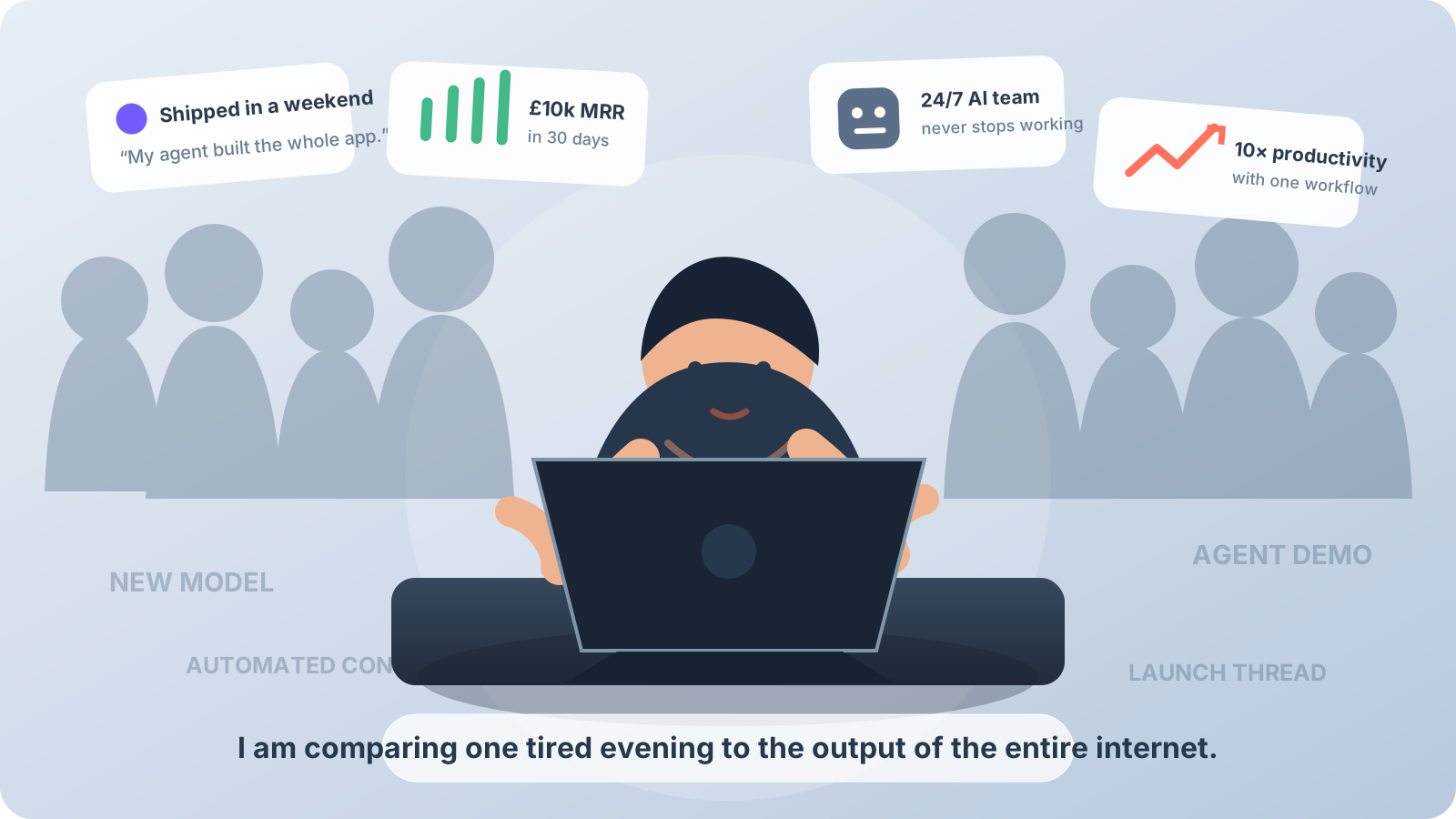
Every time I look online, someone appears to be achieving something enormous with AI.
People are building autonomous agents. They are talking about loop engineering, graph engineering, multi-agent systems, context engineering and new workflows that did not seem to exist a few months ago.
They publish screenshots of revenue.
They launch products in a weekend.
They claim they replaced entire teams with automated systems.
They produce endless streams of AI-generated content.
Even short-form video platforms are full of synthetic voices, generated images and automated stories.
It feels as though AI is everywhere, moving every hour of every day.
Meanwhile, I have a full-time job. Most days, I only have a couple of hours left for my own projects. By that point, my energy is limited and my brain is often tired.
I open social media and see the combined output of thousands of ambitious people. Then I compare it with what one tired person can achieve after work.
That comparison is impossible to win.
Still, my brain turns it into a personal failure:
Everyone is moving faster than me.
Everyone understands these tools better than I do.
I am wasting my opportunity.
I am already too late.
The more possibilities I see, the harder it becomes to choose one. Eventually, my brain freezes.
The anxiety does not make me more productive. It makes it harder to act at all.
Do I Really Need Every New AI Technique?
When I hear about ideas such as loop engineering or graph engineering, part of me feels that I should learn them immediately.
Someone else used them to build something impressive. Therefore, perhaps I need them too.
But I am beginning to think this is the wrong way around.
Human beings often learn best when we feel a real need. We encounter a problem, realise that our current knowledge is not enough and then make the effort to learn what is necessary.
Without that need, learning can become shallow and directionless.
The same principle probably applies here.
Loop engineering may be valuable when I have a process that genuinely needs a loop. Graph-based systems may be valuable when I have a problem that genuinely benefits from that structure.
But learning every new technique merely because people are discussing it publicly is not the same as making progress.
It can become another form of avoidance: studying increasingly complicated ways to build before deciding what is worth building.
Perhaps I do not need a sophisticated autonomous system yet.
Perhaps I first need a real process, a real problem or a real user need.
My Goal Is Not to Consume More AI
My actual goal is relatively simple.
I want to buy back my time.
Right now, like many people, I exchange a significant part of my time for money. I work, and I am paid for those hours.
I want to create something that gradually changes that relationship—an asset, product or system that can continue producing value without requiring every hour of my attention.
AI seems like a powerful way to move towards that goal.
But the goal is not to use the maximum number of tokens. It is not to follow every trend or build the most complicated agent architecture.
AI usage is not the outcome.
Building something useful is the outcome.
Creating value is the outcome.
Buying back some of my time is the outcome.
When I forget that distinction, I become busy without moving in a clear direction.
The Trust Problem
There is another layer to my anxiety.
AI is changing not only how we work, but also how we experience the internet.
We can no longer easily trust that an image represents a real event. A voice may not belong to a real person. A video may be generated. A review may be automated. A confident article may contain invented information.
What we read, watch and listen to can all be manufactured at scale.
The internet was never completely trustworthy, but AI has made manipulation cheaper, faster and more convincing.
That creates a deeper kind of uncertainty.
I am not only wondering how to compete in an AI-driven world. I am also wondering how to live in a world where more of what I see may be synthetic.
When content becomes almost infinite, attention becomes harder to protect.
When creation becomes cheap, judgment becomes more important.
When imitation becomes easy, trust becomes more valuable.
Perhaps that is where human value is moving—not towards producing the most content, but towards making better decisions about what deserves to exist and what deserves to be believed.
Maybe I Am Not Behind—Maybe the Measurement Is Broken
I still feel behind.
Knowing that social media is distorted does not immediately stop the feeling. Knowing that other people show their successes more often than their failures does not make the pressure disappear.
But I am starting to question the measurement itself.
What does it mean to be “caught up” with AI?
New models, tools and techniques appear constantly. Even people working in AI full-time cannot deeply understand everything that is happening.
No individual can catch up with the combined progress of an entire industry.
Trying to do so guarantees a permanent feeling of failure.
Maybe the better question is not:
Am I keeping up with everyone?
Maybe it is:
Am I using AI to make meaningful progress in the direction I have chosen?
Those are very different questions.
The first question has no finish line.
The second can be answered through small, concrete actions.
The Project I Built Still Matters
When anxiety takes over, I minimise what I have already done.
I say that I have not built much.
But I did build one project that I am proud of. It exists because AI allowed me to operate beyond what I previously believed I could do.
That matters.
It does not mean I have succeeded financially. It does not mean I have solved distribution, found product-market fit or bought back my time.
But it is evidence that I am not standing outside this transformation.
I am already participating in it.
The next step may not be learning every new AI concept. It may be continuing to work on something real, finding people who need it and learning from what happens.
That sounds less dramatic than building an autonomous company over a weekend.
It is also probably more honest.
Learning to Leave Tokens Unused
I do not think my AI anxiety will disappear completely.
The technology is moving quickly, and the economic changes around it are real. Some skills will become less valuable. New forms of competition will appear. The internet will become noisier and more synthetic.
But I do not want fear to choose my direction.
I do not need to use every token.
I do not need to follow every trend.
I do not need to build something every evening to justify the money I have already spent.
I need to choose what matters to me, use AI when it supports that direction and ignore more of the noise.
That may be the hardest skill in the AI era.
Not prompting.
Not agent orchestration.
Not loop engineering.
Knowing what not to do.